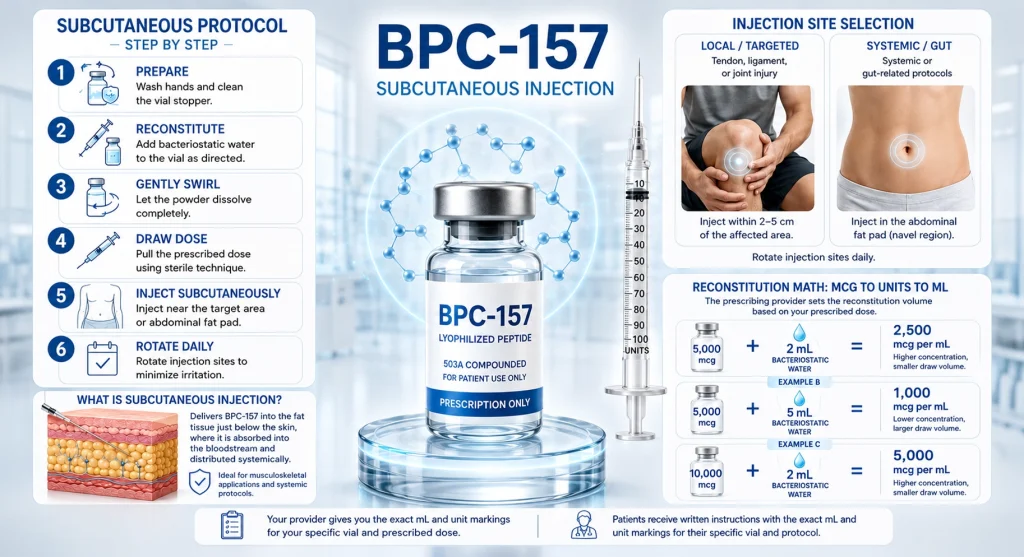
This material is educational, not a personal-preparation guide The reconstitution math for a 30 mg vial is linear: any concentration is reachable by choosing the corresponding diluent volume, but only a few concentrations make operational sense Three of the most common educational target concentrations are 10 mg/mL (3 mL diluent), 6 mg/mL (5 mL diluent), and 15 mg/mL (2 mL diluent), each useful at different dose levels The "right" answer is the one that fits the patient's prescribed weekly dose into a clean syringe gradation, not a universal formula For 12 mg weekly doses, concentrations below 10 mg/mL push the dose volume over 1 mL, beyond a single U-100 syringe Direct answer The question "how much bacteriostatic water to reconstitute 30 mg retatrutide" does not have a single correct answer
versikt ver freningen Glutathione en endogen tripeptid som ofta anvnds i laboratorieforskning som undersker den intracellulra redoxbalansen, oxidativ biokemi, molekylra signalvgar och cellulr metabolisk reglering
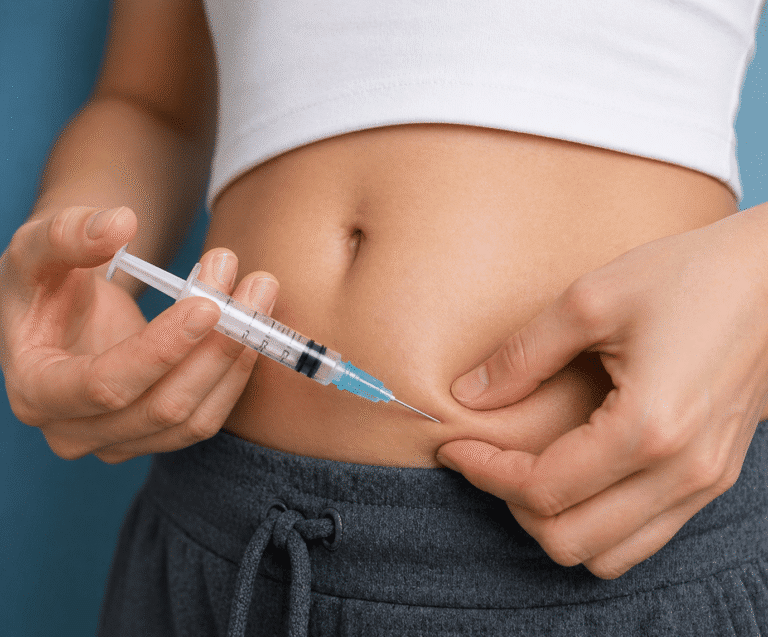
The 30-unit syringe (0.3ml), the 50-unit syringe (0.5ml), and the 100-unit syringe (1ml)
Experimental studies in PD models have reported that activation of the 5-HT 2A receptor by serotonin upregulates mitochondrial biogenesis and ATP production in cortical neurons via Sirt1 and PGC-1 (Fanibunda et al., 2019)
Other ingredients are discovered in labs and are highly technical, like ferulic acid and todays topic of discussion glutathione